Professional and high-quality metal alloys, ceramic products and concrete additives | RBOSCHCO


PRODUCT PARAMETERS
Description
Overview of Silicon Nitride Ceramic Structural Parts
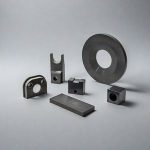
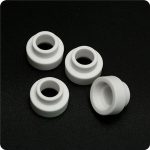
Silicon Nitride Ceramic Structural Parts are high-performance ceramic parts made of silicon nitride (Si₃N₄) as the main raw material. It has high strength, high hardness, high-temperature resistance, wear resistance, corrosion resistance and other excellent properties, a small coefficient of thermal expansion, and good insulation properties. Silicon nitride ceramic structural components are widely used in machinery manufacturing, aerospace, electronics, chemical industry, etc. They can be used to manufacture cutting tools, bearings, turbine blades, integrated circuit substrates, etc., which can significantly improve the performance and reliability of related equipment and products.
Features of Silicon Nitride Ceramic Structural Parts
Silicon Nitride Ceramic Structural Parts have a series of outstanding features:
High Strength and Hardness: Silicon Nitride Ceramic Structural Parts have extremely high strength and hardness, and their hardness is second only to a few super-hard materials such as diamond. This makes it, in the case of high pressure and high load, can still maintain a stable shape and performance, not easy to deform or rupture, can be used for the manufacture of machining tools, molds, etc., and can withstand high-speed cutting and heavy load processing requirements.
Good high-temperature resistance: silicon nitride ceramic structural parts have excellent high-temperature resistance and can maintain good mechanical properties and chemical stability in high-temperature environments. It can withstand high temperatures up to 1600℃ and is not easy to soften or melt at high temperatures. Therefore, it is commonly used in engine components in the aerospace field, high-temperature furnace linings in the metallurgical industry, etc., and can work reliably under extreme high-temperature conditions.
Good wear resistance and corrosion resistance: Silicon nitride ceramic structural components have a smooth surface, low friction coefficient, and excellent wear resistance, which can effectively resist the erosion of various abrasive media. In addition, it also has good corrosion resistance and strong resistance to acid, alkali, salt and other chemicals. It can be used in the manufacture of chemical pipelines, pump bodies, valves, etc. It can be used for a long time in harsh chemical environments to extend the service life of the equipment.
Low coefficient of thermal expansion: The coefficient of thermal expansion of silicon nitride ceramic structural parts is small, and it can maintain good dimensional stability when the temperature changes drastically, and it is not easy to produce cracks or deformation due to thermal expansion and contraction. This characteristic makes it widely used in the field of precision instruments and electronic devices, such as in the manufacture of high-precision ceramic substrates, semiconductor manufacturing equipment components, etc., to ensure the accuracy and reliability of the equipment in different temperature conditions.
Specifications table of silicon Nitride Ceramic Structural Parts
| Property | Unit | Typical Value |
| Color | – | Black – gray |
| Density | g/cm³ | 3.21 |
| Compressive Strength | MPa | 3000 |
| Flexural Strength | MPa | 800 |
| Weibull Modulus | – | 15 |
| Fracture Toughness \(K_{Ic}\) | MPa·m¹/² | 6.5 |
| Young’s Modulus E | GPa | 320 |
| Poisson’s Ratio | – | 0.28 |
| Vickers Hardness HV1 | GPa | 16 |
| Maximum Use Temperature in Inert Gas | °C | 1200 |
| Maximum Use Temperature in Air | °C | 1100 |
| Thermal Conductivity at 20°C | W/m·K | 28 |
| Thermal Conductivity at 1000°C | W/m·K | 16 |
| Thermal Expansion Coefficient \(20 – 100°C\) | 10⁻⁶/K | 2 |
| Thermal Expansion Coefficient \(20 – 1000°C\) | 10⁻⁶/K | 3.5 |
| Thermal Shock Parameter R1 | K | 600 |
| Thermal Shock Parameter R2 | W/mm | 15 |
| Resistivity at 20°C | Ω·cm | 10¹² |
| Resistivity at 800°C | Ω·cm | 10⁷ |
| Dielectric Constant 1 MHz | – | 6 |
Applications of Silicon Nitride Ceramic Structural Parts
Silicon Nitride Ceramic Structural Parts have a wide range of applications in many fields due to their excellent performance:
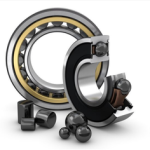
Mechanical industry: Silicon Nitride Ceramic Structural Parts are used in the manufacture of cutting tools; their high hardness and wear resistance make the cutting efficient for long tool life; the manufacture of bearings can be in high speed, high load conditions, stable operation, reduce friction loss, improve the reliability and efficiency of the mechanical system.
Aerospace field: Silicon nitride ceramic structural parts can be made into turbine engine blades, combustion chambers and other components. The characteristics of high temperature resistance and high strength enable them to withstand the high temperature and high pressure environment inside the engine, reduce the weight of the aircraft, and improve fuel efficiency and flight performance.
Electronics industry: silicon nitride ceramic structure as an integrated circuit substrate, with good insulation and thermal stability, can realize the high-density integration of electronic components to improve the performance and reliability of electronic equipment; also used in the manufacture of ceramic packaging shells to protect the internal chip from the effects of the external environment.
Energy field: in the fuel cell, silicon nitride ceramic structural components can be used as electrolyte or electrode support material; its chemical stability and high-temperature resistance help to improve the efficiency and service life of the fuel cell; in solar photovoltaic power generation can be used to manufacture photovoltaic cells such as brackets and other components, can withstand harsh outdoor environments.
Chemical industry: Silicon nitride ceramic structural parts are used to manufacture reactor linings, pipes, valves and so on. Its strong corrosion resistance can resist the erosion of various chemical media, ensure the safety and stability of the chemical production process, and reduce equipment maintenance costs.
Company Profile
RBOSCHCO is a trusted global chemical material supplier & manufacturer with over 12 years of experience in providing super high-quality chemicals and Nanomaterials. The company exports to many countries, such as the USA, Canada, Europe, UAE, South Africa, Tanzania, Kenya, Egypt, Nigeria, Cameroon, Uganda, Turkey, Mexico, Azerbaijan, Belgium, Cyprus, Czech Republic, Brazil, Chile, Argentina, Dubai, Japan, Korea, Vietnam, Thailand, Malaysia, Indonesia, Australia, Germany, France, Italy, Portugal etc. As a leading nanotechnology development manufacturer, RBOSCHCO dominates the market. Our professional work team provides perfect solutions to help improve the efficiency of various industries, create value, and easily cope with various challenges. If you are interested, please send an email to sales1@rboschco.com
Payment Term
T/T, Western Union, Paypal, Credit Card etc.
Shipment Term
By air, by sea, by express, as customers request.

5 FAQs of silicon Nitride Ceramic Structural Parts
Q1:How do different manufacturing processes affect the properties of silicon nitride ceramics?
The mainstream processes include reaction sintering, hot press sintering and air pressure sintering. Reaction sintering is low-cost and suitable for complex structures, but the density is only 2.2-2.7g/cm³, and the flexural strength is about 200-400MPa. Hot press sintering achieves densification through high temperature and high pressure, and the density is up to 3.2g/cm³, and the flexural strength is increased to 600-800MPa, but it requires special molds and has high production costs. Gas Pressure Sintering (GPS) sintering under high temperatures and a high-pressure nitrogen environment can prepare high density (>99%) and high strength (flexural strength > 850MPa) of silicon nitride ceramics, especially suitable for aerospace and other high-end fields.
Q2:What are the typical applications of silicon nitride ceramic structural parts?
In the field of machinery manufacturing, bearing balls made of silicon nitride have a coefficient of friction as low as 0.1, with a life span more than 5 times that of steel bearings, and are widely used in high-speed precision machine tools. In new energy vehicles, silicon nitride turbocharger rotors can withstand high temperatures of 1,000°C, improving engine efficiency by 15%. In the semiconductor industry, high thermal conductivity silicon nitride substrates (thermal conductivity > 100W/m・K) are used in the packaging of silicon carbide power modules, helping to realize 800V high-voltage fast charging technology. In addition, its biocompatibility makes it an ideal material for artificial joints, with a significantly lower risk of rejection than metal implants.
Q3:How to solve the brittleness problem of silicon nitride ceramics?
Toughening can be effectively achieved through microstructural design. For example, liquid-phase sintering of powders with high α-phase content (>90%) results in the formation of long columnar β-Si₃N₄ grains, which can be utilized to enhance the fracture toughness up to 6-8 MPa/m¹/² using crack bridging mechanisms. The addition of silicon carbide nanoparticles (5-10 wt%) introduces residual compressive stresses and inhibits crack extension, which further increases the fracture toughness to 9 MPa・m¹/². Carbon fiber-toughened silicon nitride composites can achieve a fracture toughness of up to 12 MPa・m¹/² while maintaining high strength through the fiber pull-out mechanism.
Q4:How do I choose between silicon nitride ceramics and other ceramic materials?
Compared to alumina ceramics, silicon nitride has three times higher flexural strength and five times better thermal shock resistance but costs two to three times more for high-temperature, high-stress scenarios. Compared with silicon carbide, silicon nitride has 40% higher fracture toughness and is less difficult to process, giving it an advantage in areas such as bearings and seals. In semiconductor packaging, the thermal conductivity of silicon nitride substrates (90W/m・K) is comparable to that of aluminum nitride, but the cost is 30% lower, making it the preferred choice for SiC power modules.
Q5:What should I pay attention to when using silicon nitride ceramic structural components?
Avoid direct contact with hydrofluoric acid or concentrated strong bases (e.g., > 30% NaOH solution) during installation to prevent chemical corrosion. In high-temperature environments, (>1200°C), oxidation resistance should be improved by coating (e.g., Si₂N₂O oxide) or structural design (e.g., gradient materials). Diamond grinding wheels or laser cutting are recommended for machining to avoid micro-cracks caused by machining. For dynamically loaded parts, non-destructive testing (e.g., ultrasonic flaw detection) is required to exclude internal defects.
REQUEST A QUOTE
RELATED PRODUCTS
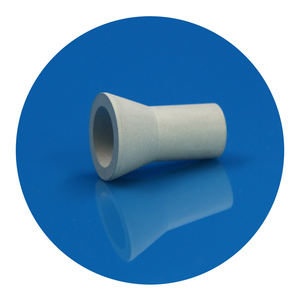
High quality corrosion resistant boron nitride ceramic shaft
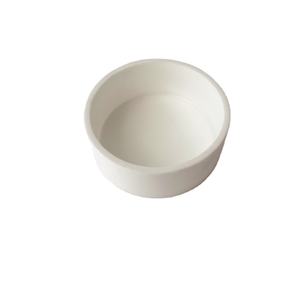
High Temperature and Corrosion Resistant High Quality Aluminum Nitride Crucible

High quality fine processing aluminum oxide electronic cigarette porous ceramic core
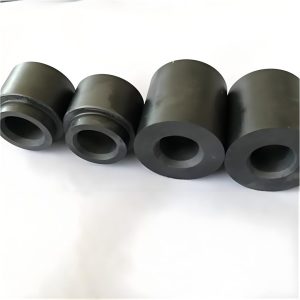
Insulated High Temperature Silicon Nitride Tubes Si3N4
High thermal conductivity industrial alumina ceramic sleeve