Professional and high-quality metal alloys, ceramic products and concrete additives | RBOSCHCO



PRODUCT PARAMETERS
Description
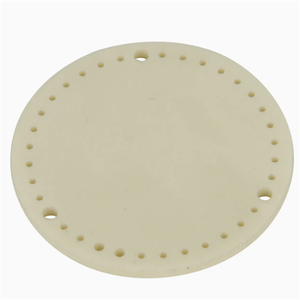
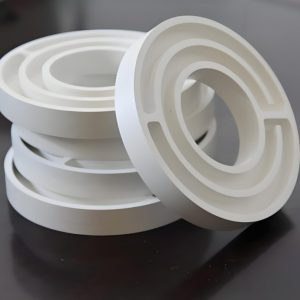
Overview of Aluminum Nitride Radiator Ring Plate
Aluminum Nitride Heat Sink Ring Plate is a kind of heat dissipation component with Aluminum Nitride ceramic as the main material. It has high thermal conductivity and can quickly conduct heat from the heat source to the outside world, effectively cooling down the electronic equipment. At the same time, the aluminum nitride radiator ring has good electrical insulation, which can prevent short circuits and ensure the safety of equipment. In addition, aluminum nitride radiator ring plate also has high mechanical strength, chemical stability, low expansion coefficient and other characteristics, can maintain stable performance in complex environments and different temperature conditions, and are widely used in electronic information and other high-tech fields.
Features of Aluminum Nitride Radiator Ring Plate
Aluminum nitride heat sink ring plate shows unique and excellent performance advantages in the field of heat dissipation. Its most prominent feature is that it has a super high thermal conductivity and can conduct heat from the heat source to the outside world at an amazing speed; compared with the traditional heat dissipation materials, the heat conduction efficiency is greatly improved, even in the extreme working conditions of high-power electronic equipment continues to heat, can quickly disperse heat, so that the equipment is always in the appropriate operating temperature range, thus greatly enhancing the stability of the operation and service life of the equipment.
In terms of electrical performance, it has excellent electrical insulation performance, can effectively conduct heat at the same time, build up a reliable insulation barrier, completely eliminate the heat dissipation process caused by circuit short circuits, leakage and other potential safety hazards, for precision electronic components to provide solid safety protection, which is critical for the insulation requirements of the semiconductor, communications equipment and other fields.
Mechanical properties: The aluminum nitride radiator ring plate has very high mechanical strength; in the face of mechanical vibration, external impact and other conditions, it can still maintain structural integrity, not easy to deformation, rupture and other problems, to ensure that the function of heat dissipation is not affected. Aluminum nitride radiator ring plate chemical stability is also very good, whether in the humidity, acid and alkali and other harsh chemical environments, or long-term exposure to the air, are not easy to be corroded by chemical reactions to maintain long-term stability. At the same time, the low coefficient of thermal expansion characteristics, so that the aluminum nitride radiator ring plate in different temperature conditions, the size of the change is very small to avoid damage to the equipment due to thermal expansion and contraction of the stress generated by the equipment further to protect the reliability and stability of the equipment operation, and therefore in the aerospace, new energy vehicles and other extremely stringent requirements of the thermal material of the forefront of the field, but also got a wide range of depth of the application.
Specifications table of Aluminum Nitride Radiator Ring Plate
| Property | Unit | Typical Value |
| Material | – | Aluminum Nitride (AlN) |
| Purity | wt% | 95% – 99%2 |
| Density | g/cm³ | 3.32 – 3.33512 |
| Thermal Conductivity | W/(m·K) | 170 – 23027 |
| Bending Strength | MPa | 410 – 45023 |
| Young’s Modulus | GPa | >3202 |
| Hardness | HV1 – 10002 | – |
| Maximum Service Temperature in Air | ℃ | 8002 |
| Linear Coefficient of Expansion (40 – 400℃) | 10⁻⁶/K | 4.62 |
| Linear Coefficient of Expansion (40 – 800℃) | 10⁻⁶/K | 5.32 |
| Specific Heat | J/(kg·K) | 7402 |
| Resistivity (20℃) | Ω·cm | 1×10¹⁴2 |
| Resistivity (300℃) | Ω·cm | 1×10¹²2 |
| Resistivity (500℃) | Ω·cm | 1×10¹⁰2 |
| Dielectric Strength | kV/mm | >152 |
| Dielectric Constant (1MHz) | – | >8.62 |
| Volume Resistivity | Ω·cm | 1×10¹⁴2 |
| Color | – | Gray or off – white3 |
| Surface Roughness | μm | 0.3 – 0.51 |
| Warpage | length‰ | ≤2‰ |
Applications of Aluminum Nitride Radiator Ring Plate
Aluminum nitride radiator ring plate plays a key role in many fields due to its excellent heat dissipation and physicochemical properties.
In the field of electronic communications, 5G base station equipment will generate a lot of heat when running; aluminum nitride radiator ring plate can quickly dissipate the heat to ensure that the base station works stably and improve the quality of signal transmission; in the server data center, the continuous operation of high-density chips generates serious heat, and it is highly efficient in dissipating heat, to avoid overheating leading to data processing delays or equipment failure.
In the aerospace field, aircraft electronic systems work in extreme temperature environments; aluminum nitride radiator ring plates not only strong heat dissipation but also, due to the low coefficient of expansion and high mechanical strength, in severe vibration, high and low-temperature changes to protect the stability of the equipment performance, to ensure that the navigation, communication and other systems operate normally.
In the new energy vehicle industry, the battery management system and motor controller have stringent requirements for heat dissipation. Aluminum nitride radiator ring plate can effectively control the battery temperature, prevent overheating and cause potential safety hazards, improve the battery service life and range, and help optimize the performance of new energy vehicles.
Company Profile
RBOSCHCO is a trusted global chemical material supplier & manufacturer with over 12 years of experience in providing super high-quality chemicals and Nanomaterials. The company exports to many countries, such as the USA, Canada, Europe, UAE, South Africa, Tanzania, Kenya, Egypt, Nigeria, Cameroon, Uganda, Turkey, Mexico, Azerbaijan, Belgium, Cyprus, Czech Republic, Brazil, Chile, Argentina, Dubai, Japan, Korea, Vietnam, Thailand, Malaysia, Indonesia, Australia, Germany, France, Italy, Portugal etc. As a leading nanotechnology development manufacturer, RBOSCHCO dominates the market. Our professional work team provides perfect solutions to help improve the efficiency of various industries, create value, and easily cope with various challenges. If you are interested, please send an email to sales1@rboschco.com
Payment Term
T/T, Western Union, Paypal, Credit Card etc.
Shipment Term
By air, by sea, by express, as customers request.
5 FAQs of Aluminum Nitride Radiator Ring Plate
Q1:What are the difficulties in machining aluminum nitride radiator ring plate?
Material brittleness: Aluminum nitride has high hardness (HV1-1000), low fracture toughness (3-4 MPa・m¹/²), and is prone to micro-cracks during machining. Ultra-precision machining techniques are required, such as chemical mechanical polishing (CMP) and magnetorheological polishing (MRF), which can reduce the surface roughness to 0.3-0.5 μm and avoid loss of thermal conductivity.
Dimensional accuracy: the ring structure needs to ensure flatness ≤2‰, thickness tolerance ±0.01 mm, usually using a combination of laser cutting and electrolytic internal dressing grinding (ELID) process.
Interfacial bonding: The bonding with metal substrates (e.g., copper) requires active metal brazing (AMB), and by adding titanium, nickel and other elements to improve wettability, the interfacial thermal resistance can be reduced to 0.5 K・cm²/W or less.
Q2:How to evaluate the quality of Aluminum Nitride Radiator?
Thermal performance testing: Laser flash method to measure thermal diffusivity, combined with density and specific heat capacity to calculate thermal conductivity within ±5%.
Structural integrity: X-ray diffraction (XRD) for crystalline phase purity and ultrasonic scanning for internal porosity (<1% porosity).
Reliability verification: Thermal cycling test (>1000 cycles) from – 55°C to + 175°C for cracks or delamination.
Q3: What is the cost of an aluminum nitride radiator ring plate?
Material cost: 99% pure Aluminum Nitride powder costs about $350-500/kg, 5-10 times more than Alumina, but only 1/100th of Diamond.
Processing cost: Ultra-precision polishing and metallization account for 40%-50% of the total cost, and customized products (e.g., shaped ring plates) cost 30%-50% more.
Cost-performance analysis: In high power density scenarios (e.g., server CPU cooling), the overall cost of Aluminum Nitride is 20% lower than copper-based solutions (considering insulation and maintenance costs).
Q4:What are the technical innovations in aluminum nitride radiators?
Composite structure: AlN/Cu gradient composites are prepared by the Reactive Infiltration Process (RIP), which increases the thermal conductivity to 100 W/(m・K) and reduces the CTE mismatch stress.
Surface modification: Nanosilver coating reduces interfacial thermal resistance by 70%, making it suitable for low thermal resistance packaging of high-frequency devices.
3D Printing: Selective Laser Sintering (SLS) technology realizes complex runner design and improves thermal efficiency by 40%.
Q5: What is the future direction of aluminum nitride?
Cost optimization: The purity of domestically produced powder has been increased to 99.5%, and the price is expected to drop by 30% by 2025.
Function integration: integrated microchannel cooling structure, heat dissipation density exceeding 1000 W/cm².
Environmental trend: lead-free brazing and recyclable design become mainstream, complying with EU RoHS directive.
REQUEST A QUOTE
RELATED PRODUCTS
Precision Machining of High-purity Silicon Nitride Rods
Wear-resistant silicon nitride ceramic high-precision silicon nitride degassing rotor impeller shafts
High quality corrosion resistant boron nitride ceramic shaft
ALN Ceramic Ring High Thermal Conductivity Aluminum Nitride Washer Aluminum Nitride Ceramic Ring Aluminum Nitride Ring

Customized industrialized high quality metallized ceramic insulators
